How to Create an Indoor Bubble Show
If you’re reading this, I know exactly the stage you’re at because I was there not too long ago myself.
Creating an indoor bubble show has been the biggest challenge of my bubble journey. It requires so many different skills, some of which came naturally to me, and many that absolutely didn’t.
When I first started, my “show” was really just a collection of bubble tricks thrown together. It was enough to get me out there performing, and that’s what mattered. Every performance became part of a huge learning curve.
The biggest challenges I personally faced weren’t actually the bubbles.
They were:
- Controlling the children.
- Dealing with self-doubt.
- Learning how to perform while feeling incredibly nervous.
To be completely honest… I hated it.
During Covid, I actually gave up on the idea of performing an indoor bubble show altogether. But afterwards, I came back with one goal: I was determined to crack it.
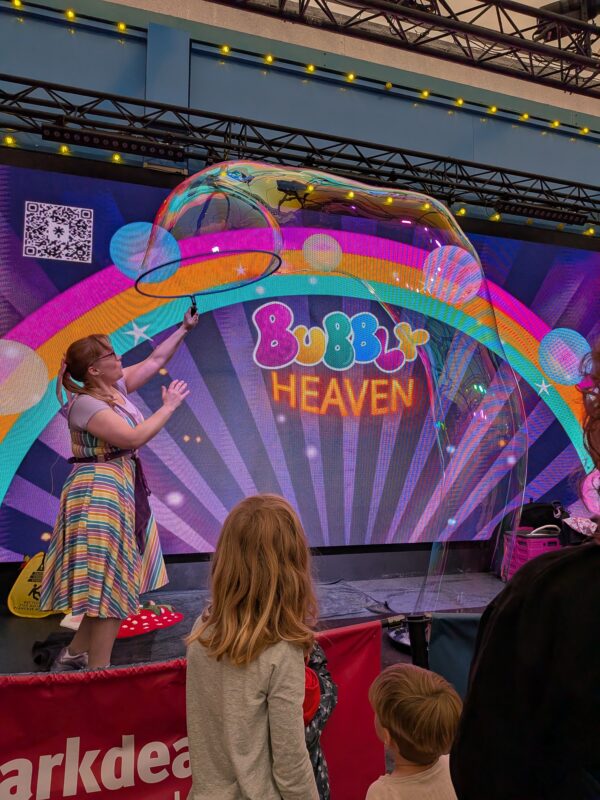

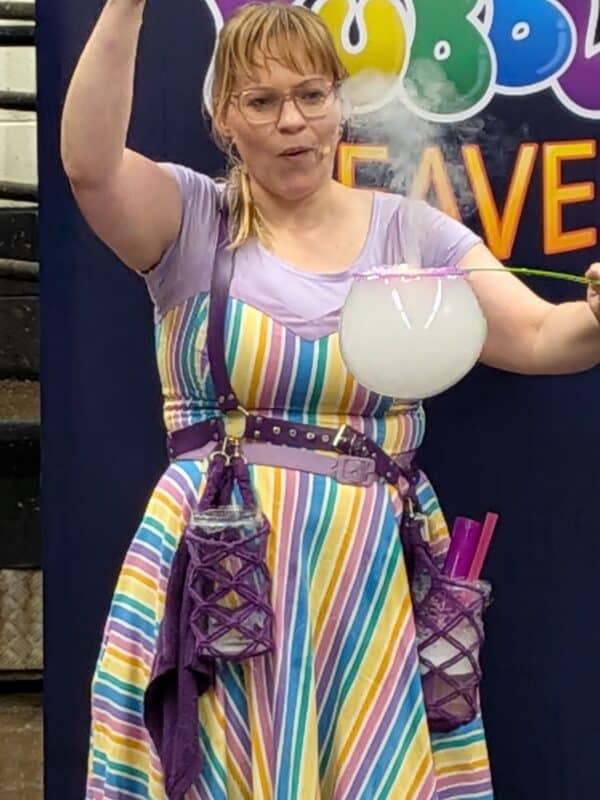

My Show Didn’t Appear Overnight
The bubble skills are only one part of creating a great show.
The content, structure and performance all developed over time, and I certainly didn’t do it alone.
I was incredibly lucky to work alongside fellow bubble entertainer Caroline Ainslie, while my wonderful artistic directors, Lucy Spielberg and Bubble La Fae, helped shape the creative side of the show. Together, we spent incredible 121 days developing ideas, testing routines and refining every little detail.
The performance side—building confidence, overcoming anxiety and becoming comfortable on stage—was something I worked on with my mentor, Damian Jay, from the AOIBA.
These amazing people helped me unlock something I didn’t know I had. They encouraged me, challenged me and gave me a safe space to explore ideas, make mistakes and bounce around possibilities.
They’ll probably tell you that I did all the hard work—and yes, I put in the hours—but honestly, without their guidance, support and creative input, I’d probably still be fumbling around in the dark trying to make everything fit together.
I’m incredibly grateful for the role they played in helping me turn an idea into a real performance.
From Fear To Loving Performing
I genuinely can’t believe I’m writing this now…
I actually love performing.
Not only do I enjoy it, but I genuinely look forward to every show.
Of course, I still get nervous—but it’s a completely different kind of nervous now. It’s no longer the feeling of “I don’t know if I can do this” or doubting my abilities. It’s the excitement of wanting to do a great job, create a brilliant experience for the audience and give the best performance I can.
I get such a huge buzz from performing. The adrenaline, the energy from the children and the feeling of creating those magical moments is incredible. I am no longer a deer caught in the headlights, I’m now relaxed, present and enjoying the conversation with my audience.
It feels amazing.
Coming from an Art & Design background, drama and performing certainly didn’t come naturally. Standing in front of a room full of children (and their grown-ups!) was miles outside my comfort zone.
It was important to me to face my fears and push through the things that were holding me back.
From a professional point of view, I knew that developing an indoor show would unlock a huge opportunity. Being able to offer indoor performances, especially during the autumn and winter months when outdoor events become more challenging, opened up a completely new area of my business.
But it was also much more personal than that.
I wanted to overcome the social anxiety and public speaking nerves that I had carried with me for years. Performing forced me to step outside my comfort zone, face those fears and build confidence in a way I never thought possible.
After being in limbo for so long, I never truly believed I had the ability to see it through. It was hard. Really hard.
But we can do hard things.
Creating A Show Requires Many Skills
And please don’t feel any shame or feel like you are lacking if creating a show feels overwhelming.
There are people out there who can help you.
One thing I’ve realised is that creating a show isn’t just about developing your bubble skills. That is only one piece of a much bigger puzzle, and that is why it can feel so incredibly hard to master.
A great show requires a combination of so many different skills, including:
- Bubble skills and technical ability.
- Public speaking and audience engagement.
- Sound and music technology.
- Script writing and storytelling.
- Performing arts and stage presence.
- Set design and visual presentation.
- Character development.
- Costume design.
- Graphic design and marketing.
And so much more.
It’s completely normal to feel like you’re learning a hundred different things at once—because you are.
You don’t have to be an expert in every area from day one. The magic comes from continuing to learn, finding support from people with different strengths and slowly bringing all those skills together to create something unique.
Don’t Be Afraid To Ask For Help
If you are struggling with any part of creating your show, reach out and ask for help.
There are so many talented and experienced people in the bubble community who are willing to share their knowledge and support others on the journey.
You can also simply ask questions in our Newbie Bubble Entertainer group. No question is too simple, too small or too silly.
We all started somewhere, and the only way to grow is to ask questions, experiment and keep learning.
The Value Of An Artistic Director
One of the biggest lessons I learned is just how valuable another creative pair of eyes can be.
When you’re performing your own show, it’s almost impossible to see it from the audience’s perspective. A good artistic director can help with pacing, storytelling, audience engagement, stage presence and turning a collection of bubble tricks into a performance that feels polished and flows naturally from beginning to end.
If you’re serious about creating your own indoor bubble show, I’d highly recommend working with an artistic director or performance coach if you have the opportunity. It can save months—or even years—of trial and error. I can personally reccommend Lucy Speilburg and Bubbles LaFae.
If you’d like some help on the bubble side of things, I also offer one-to-one mentoring days. We can spend the day developing your bubble skills, structuring your tricks, refining your set up, implementing crowd control, and exploring improvements together.
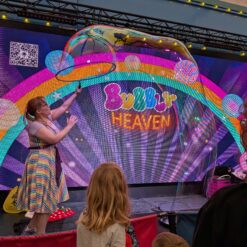
Watch Me In Action!

Where Should You Start?
The best advice I can give is simple…
Go and watch shows.
Not just bubble shows either.
Watch magicians, entertainers, storytellers, clowns and children’s performers.
YouTube is brilliant for inspiration, although you don’t always get to see how the audience reacts. If you get the chance to see live performances, even better.
Then hire a village hall, take all your bubble kit, press record on your phone and just play.
Experiment with different ideas, different music and different pacing.
Choose tracks with different tempos so your whole show doesn’t sound the same all the way through.
When you’re finished, watch yourself back.
This is incredibly valuable.
The funny thing is that what feels terrible while you’re performing often looks absolutely fine on camera. Some of the moments you thought went wrong may actually become your favourite parts.
That’s how ideas grow.


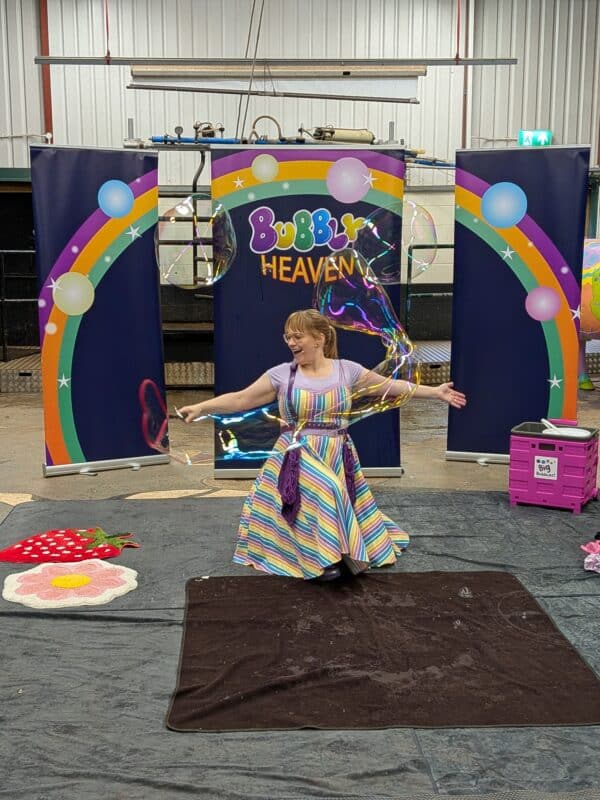

Structure Your Show Carefully
The order of your show matters far more than you might think.
I always recommend starting with something technically simple. Not only does this help settle your nerves, but it also gives you a chance to get a feel for your audience. Every group of children is different, and those first few minutes tell you so much about their energy levels, how they’ll respond and how much crowd control they will require.
It’s also worth thinking about your equipment when you’re planning your running order. Try to group tricks that use the same equipment together so you’re not constantly changing things over. It keeps the show flowing smoothly and means you spend less time searching for props or swapping equipment.
For example, I keep all of my hand bubble tricks together, then all of my smoky bubble routines together. It makes the whole performance feel much more polished.
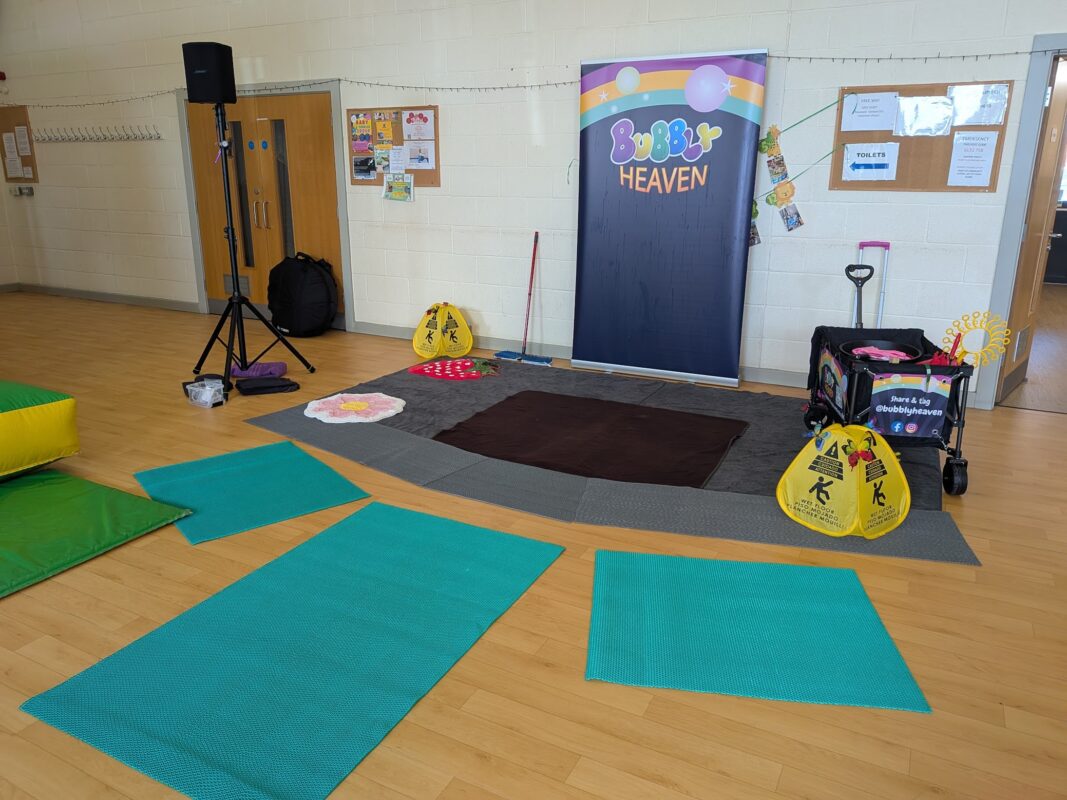
My Party Show Set Up
Performance space: approx 5m × 2m

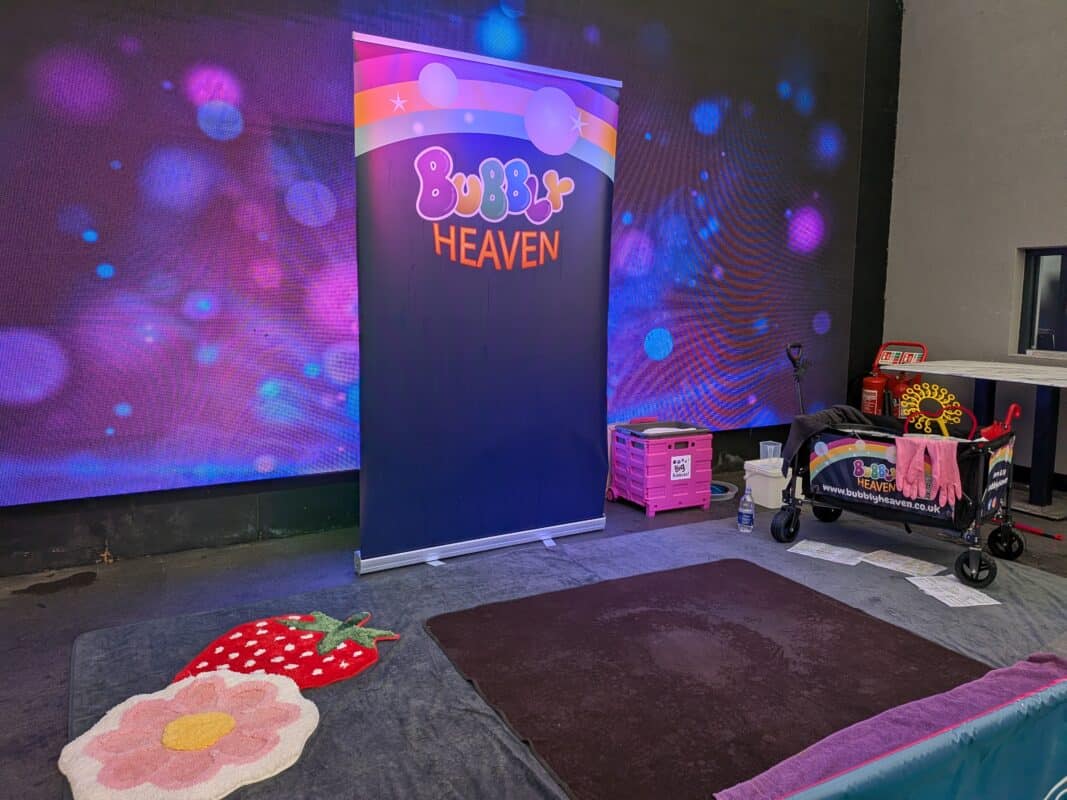
My Event & Stage Show Set Up
Performance space: approx 6m × 4m
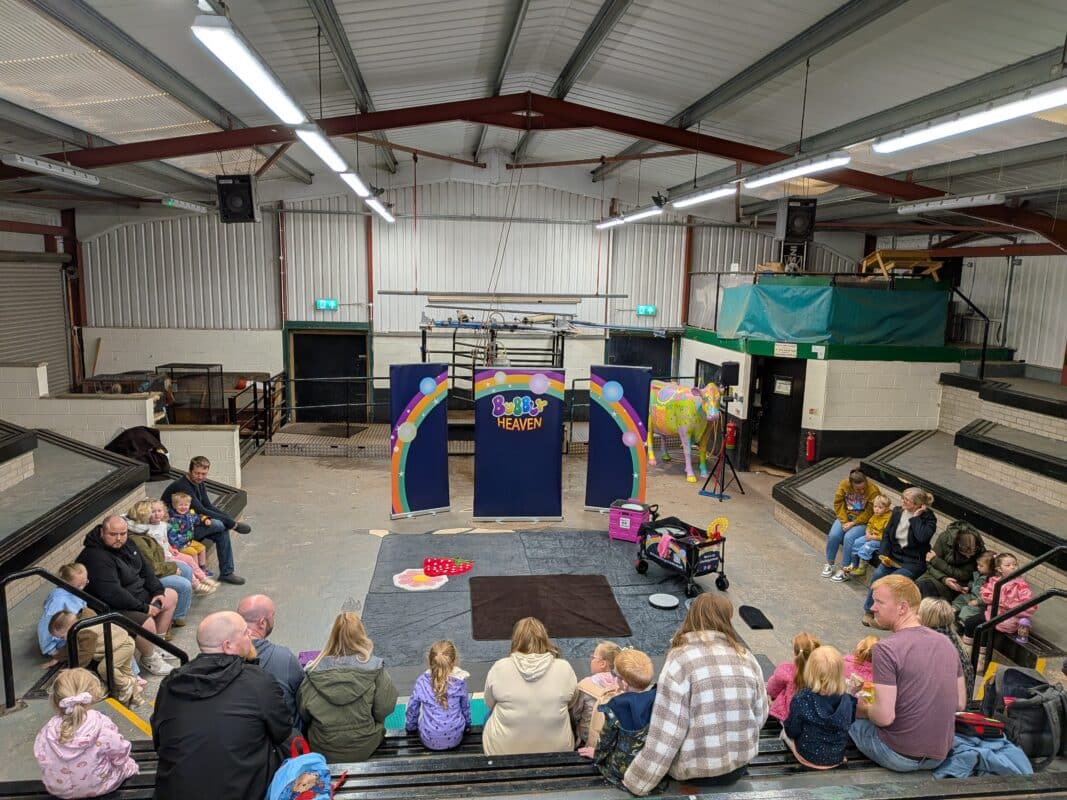
Practical Tips That Have Helped Me
-
Let Children Pop Some Bubbles
Near the beginning, I deliberately give the children bubbles they are allowed to pop. It gets that excitement out of their system.
I explain my golden rule:
“Bubbles on my side are for watching. Bubbles on your side are for popping… or blowing!”
I actually introduce the children to blowing bubbles first. We play a game where they try to keep bubbles floating in the air, or they learn how to blow bubbles inside bubbles. By the time we get to the popping bubbles part, many of the children have already discovered that blowing and playing with bubbles is just as much fun.
This also helps change the energy in the room. They learn that bubbles aren’t only something to chase and pop—they’re something to watch, interact with and enjoy.
The goal is to give them that hands-on experience while still teaching them that my performance space is a place for watching and wondering.
Be careful not to accidentally teach children that it’s okay to pop bubbles in your performance space.
This can happen quite easily if you create popping bubbles in a very uncontrolled way. Children learn from what they see, so if bubbles are flying everywhere and everyone is encouraged to chase and pop them anywhere, it can become much harder to bring them back into your performance rules afterwards.
Personally, I choose to use a bubble gun for my popping bubble moments because it gives me much more control. I can decide exactly where the bubbles go, aim them towards the area where children are allowed to interact, and keep the energy fun while still maintaining boundaries.
The key is making the popping part feel like a planned activity rather than teaching children that every bubble they see is something to chase.
You’ll probably need to repeat your rules several times throughout the show, and that’s completely normal.
I naturally have quite a friendly voice, so I make the reminders soft and playful rather than sounding bossy.
-
Outdoor Bubble Entertainment Is a Different Skill
Outdoor bubble entertainment and indoor bubble shows are almost two completely different jobs.
When I first started working outdoors, I actually found it much easier.
It felt more like providing an activity, in the same way that balloon modelling or face painting is an activity. I wasn’t really performing—I was making bubbles, interacting with people and letting the bubbles do most of the work.
And that’s absolutely okay.
You can have a very successful outdoor business simply as a bubble maker and workshop provider. You don’t necessarily need the performance skills that an indoor stage or party show demands.
Indoor shows are completely different.
You can’t just make bubbles for 30 minutes. Aside from creating an enormous mess, it simply wouldn’t be safe. Indoors, you need structure, storytelling, audience management, pacing, music, clear boundaries and performance skills to hold everyone’s attention.
I should also add that my indoor and outdoor kits are completely separate. There isn’t a single wand or prop that’s the same between them.
The equipment I use outdoors is designed for big visual impact, movement and working with the elements. My indoor kit, on the other hand, has been carefully chosen for indoor spaces, better control, safety and creating effects that work well inside.
Interestingly, my outdoor work has evolved too.
When I first started, I was simply a bubble maker.
Now I bring much more performance into my outdoor events. They’re a combination of bubble making, interaction and showmanship, which creates a much richer experience for the audience.
So if you’re brilliant outdoors but find indoor shows challenging, don’t be discouraged —you’re simply learning a different set of skills.
Both are rewarding, but they require very different approaches.
-
When you are ready to get in front of an audience
Before I performed my show professionally, I bored my children and family to death by performing it for them over and over again!
But I needed to. It gave me the chance to get used to performing in front of people I trusted and helped me build confidence before stepping in front of a real audience.
When I finally felt ready, I started offering a few free shows in exchange for experience and permission to take photos or film the performance for my own professional development.
Those first few photos were enough to start advertising my indoor bubble show.
But the videos…
They were priceless.
Watching them back was worth their weight in gold.
I could see how the audience reacted to different moments, which moments landed, where children became distracted and how I could improve my crowd control, pacing and routines.
If you can, film from two angles:
-
Facing the audience so you can study their reactions, laughter and engagement.
-
From the back of the room towards you so you can watch your own performance, movement, body language and stage presence.
You’ll notice things on camera that you never realised while you were performing.
Every time I watched a recording, I came away with new ideas and little improvements to make.
Don’t be afraid to make changes. Your show will naturally evolve as you perform it more, and every audience will teach you something new. It feels like hard work at the beginning but trust the process and know you will eventually have a show you know of by heart.
-
Give the Audience a Chance to Join In
Children love opportunities to get involved.
Whether it’s popping bubbles, blowing bubbles, answering questions, call to actions, or playing with foam, those hands-on moments create wonderful memories.
But here’s something that surprised me.
I’ve found that children—and adults—often get just as much enjoyment from watching.
The excitement, anticipation, laughter and call-and-response moments between you and your audience often become the real highlights of the show.
The bubble popping is simply the icing on the cake.
Don’t feel every minute has to involve the audience physically touching bubbles. Sometimes the biggest reactions come from simply building suspense and letting everyone watch in amazement.
-
Under 5s Sit With Their Grown-Up
Any child under five sits with an adult.
This simple rule has made a huge difference to my shows.
-
Remove Distractions
If there’s a bouncy castle, ask for it to be switched off during the show.
The same goes for any other distractions.
You’ll be amazed how much easier it is to hold everyone’s attention.
-
If You’re Using Banners or Backdrops
The background behind your bubbles makes a huge difference to how they look.
Bubbles always stand out best against a dark background. Against white or very light backdrops, they can almost disappear, making it much harder for your audience to appreciate their colours and shapes.
Have you ever noticed how spectacular bubbles look outdoors on an overcast day? When the sky is filled with dark clouds, the bubbles suddenly seem brighter, more colourful and much easier to see.
The same principle applies indoors.
If you’re using banners, backdrops or staging, even costumes, consider choosing darker colours where possible. Not only will your audience see the bubbles more clearly, but your photographs and videos will also look far more vibrant.
It’s a small detail, but one that can make a big difference to both your audience’s experience and the quality of your promotional photos.
-
Protect the Floor
Dog whelping mats are brilliant.
They’re easy to clean and dry quickly between shows.
They’ve become one of my favourite bits of kit.
Read our blog on how to manage mess.
-
Always Have a Plan B
Write a show plan.
Then write a backup plan.
Every venue is different, every audience is different and sometimes things simply don’t go as expected.
Learning to adapt is one of the biggest skills you’ll develop.
I still learn something new from almost every show.
-
Practise Until It’s Automatic
Don’t just practise until you can do a trick.
Practise until you can perform it consistently.
When I was learning, I actually set up a mini bubble station in my living room and practised every day for about a month.
It made a huge difference.
-
Be Ready for Moving Air
Some venues have unexpected drafts.
In smaller rooms and halls, you can’t always shut doors or completely control the airflow. Sometimes you simply have to work with what the venue gives you.
Interestingly, a little movement in the air isn’t always a bad thing.
Some of my most beautiful bubble moments have happened because of it. Watching a bubble take flight, twist, stretch and change shape while the whole audience follows it with excitement.
I adjust some tricks to match the airflow, for example, if I’m performing the cube shape bubble trick, I always carry a square frame as a backup so I can still perform the effect if the air is moving too much for the standard cube blown on a wand.
Thinking ahead like this saves a lot of stress on the day.
-
Using Volunteers in Your Show
If you decide to use volunteers in your show, make sure they’re adding to the entertainment rather than simply filling time.
Keep an eye on the rest of your audience. Are they still engaged, or have they started chatting amongst themselves? I’ve seen volunteer sections that are absolutely brilliant, and I’ve seen others where the audience quickly loses interest.
Remember, your show isn’t just about the one person you’ve invited to the front—it’s about entertaining everyone in the room.
Most importantly, set your volunteer up to succeed.
Choose activities where they can have a magical moment and feel proud of themselves. Avoid putting them in situations where they might feel awkward, embarrassed or likely to fail. It’s not enjoyable for the volunteer, and it isn’t enjoyable for the audience to watch either.
Personally, I don’t use volunteers in my 30-minute party show. There simply isn’t enough time, and I’d rather make the whole audience part of the experience. My shows are immersive and interactive, so every child gets involved through, call-and-response, interactive bubbles and shared moments.
If I were creating a longer theatre show, however, I would absolutely consider using volunteers. The pacing, audience expectations and format are very different, so they can become a valuable part of the performance.
-
Timings
My indoor shows are 30mins long.
For events I do 30mins Shows, up to 3 shows per day.
For parties, with a set amount of children 20-30 max, then i will do 45mins which consists of 30mins Show + KIB.
I would only consider longer shows for theatres.
-
Steam, Helium & Fire
People often ask me whether I use steam, helium or fire in my bubble shows.
The simple answer is: not in my children’s party shows or family event performances.
This isn’t because these effects aren’t amazing—they absolutely can be. It’s because every additional effect brings extra equipment, extra preparation and extra responsibility.
At this stage, I already have enough kit and set up time! I’m always looking for ways to reduce my equipment, simplify my setup and make my shows run as smoothly as possible. Adding extra layers of complexity doesn’t fit with the type of performances I currently deliver.
-
Steam
I have experimented with steam, and the effects can be absolutely beautiful.
There is something truly magical about steam bubbles. Watching them float upwards towards the ceiling before slowly falling back down as they cool is a stunning visual moment, and audiences are always amazed by the effect.
However, I made the decision not to include it in my current children’s shows.
Having a hot steaming device within reach of excited children is not something I want to be responsible for managing in a party or event environment. Safety, control and simplicity are incredibly important to me.
I may revisit this effect in the future when I develop a longer theatre-style show, where the performance space allows for a clear and controlled boundary between the equipment and the audience.
-
Helium
I have also experimented with helium and I do own the equipment. I recommend https://bupplestore.fr/
For now, I have chosen to put it aside for a future project.
My plan is to revisit helium when I start developing a longer theatre-style show—along with steam. This would be closer to a one-hour performance where I can expand the storytelling, introduce volunteers and build on my existing successful 30-minute show.
A theatre environment has a very different structure from a party setting and allows more time to explore larger effects in a controlled way.
-
Fire
Fire is another effect I may explore in the future, but only with the correct training and preparation.
Fire effects can be incredible when performed safely and professionally, but they require specialist training, suitable insurance, risk assessments and strict safety procedures.
If you see people online creating flaming bubbles or fire effects on people’s hands or heads, please don’t simply copy what you see. This is not considered safe professional fire performance. Trained fire performers maintain clear safety boundaries between themselves, their equipment and the audience.
Fire should never be treated as a casual addition to a show. If you are interested in adding fire effects to your performances, seek proper training and professional advice first.
Read more: Fire Safety Advice for Bubble Entertainers
-
Crowd Control
Good crowd control can make or break a bubble show.
It’s one of those skills that looks effortless when done well, but it takes time, practice and experience to develop.
I certainly didn’t get it right from the beginning.
Most of what I know has come from making mistakes, learning from them and continually refining my approach. One of the biggest things that helped me improve was filming my shows and watching them back. It allowed me to spot moments where I lost the audience’s attention, where my instructions weren’t matching my actions and I was causing confussion.
If crowd control is something you’re struggling with, it’s a skill I can help you develop during a one-to-one mentoring day. We’ll look at practical techniques, audience management, setting boundaries in a fun way.
I’ll also be covering crowd control in much more detail in my upcoming course, Create Your Own Bubble Show with HollyPop.
-
Don’t Try to Do It All at Once
One of the biggest mistakes you can make is thinking your show has to be “finished” before you start performing.
It doesn’t.
My bubble show has developed in stages, and it’s still evolving today.
At first, my focus wasn’t on having the perfect show—it was simply about building confidence and gaining experience in front of an audience.
Once I felt more comfortable performing, I started developing a show that I was genuinely proud of. From there, everything else gradually fell into place.
My character evolved.
My staging evolved.
My set-up evolved.
My routines evolved.
Even my performer name, Holly Pop, didn’t come along until May 2026!
If I’d waited until every detail was perfect before performing, I probably would never have started.
Your show doesn’t need to be perfect—it just needs to be good enough to get out there, perform, learn from real audiences and keep improving.
Creating a show is a big project, so don’t feel like you have to do it all in one go.
I dipped in and out of developing mine for quite a while. There were times when I’d make huge progress, then I’d step away for a few weeks because life got busy or I simply needed time to process everything I’d learned and let new ideas develop.
Looking back, I don’t think that time was wasted at all—it was part of the creative process.
The biggest leaps forward came when I intentionally focused on one area at a time.
Spending 121 days working alongside my mentors and artistic directors completely transformed my show. It gave me dedicated time to experiment, refine ideas and receive honest feedback that I simply couldn’t have achieved on my own.
The same was true for my bubble skills. Every time I attended bubble conventions, workshops and masterclasses, I came away with new techniques, fresh inspiration and a renewed excitement to improve. Investing in my learning accelerated my progress far more than trying to figure everything out by myself.
Think of your show as something that will always be growing. Every performance teaches you something new, every audience gives you fresh ideas and every season you’ll find little things you want to improve.
The important thing is to keep moving forwards. Small improvements made consistently over time soon add up, and one day you’ll look back and realise just how far your show has come.
-
Feel the Fear… and Do It Anyway
One mindset has helped me more than any other throughout this journey:
Feel the fear… and do it anyway.
I remember vividly when my daughter was younger. She was sitting at the top of a huge death slide, absolutely terrified to go down.
I said to her, “You just have to let yourself go. Think how amazing you’ll feel afterwards.”
So she did.
She looked terrified all the way down, but as soon as she reached the bottom she jumped up laughing and immediately ran back to join the queue so she could do it all over again.
I remember standing there thinking…
That’s exactly what facing my own fears needs to be like.
Here I was telling my daughter to be brave, I needed to practise what I was preaching.
So that’s what I did.
I stepped in front of audiences, even though I was terrified. I kept performing, even when I doubted myself. I accepted that feeling uncomfortable was simply part of learning something new.
Over time, the fear changed into more of an anticipation.
Now, I genuinely look forward to performing. I love the adrenaline, the connection with the audience and creating those magical moments and memories for children and their families. It warms my heart when parents reach out to me on social media or via email to tell me how much they and their child enjoyed the show.
Sometimes the biggest thing holding us back isn’t our ability…
It’s simply letting ourselves go.
-
Music: Creating a Flow That Supports Your Show
Music is something I underestimated at the beginning.
When I first started, my show music was made up of separate MP3 tracks. I used a remote to change between songs during the performance, but looking back, this actually held me back.
It became another thing I had to remember.
During the show, I was trying to think about my routines, engage with the audience, remember my equipment and manage the children—while also remembering which track came next. I often found myself glancing at my show notes to remind myself what routine was coming up.
Eventually, I changed my approach.
I took my original MP3 tracks and edited them together into one continuous 30-minute soundtrack. I added filler music between sections, which gave me breathing space to reset, move equipment, prepare the next routine and naturally transition from one part of the show to the next.
This completely changed the flow of my performance.
The music became more than just background sound—it became a prompt and a guide. It helped me remember where I was in the show without needing to look at my notes.
Since making this change, I rarely need to check my show plan during a performance.
A good soundtrack should support you, not add another layer of stress. The more things you can automate and make second nature, the more you can focus on what matters most: your audience and creating magical moments.
-
I’m Still Learning
Even now, I still have plenty I want to improve.
I’d love to take some clowning workshops—not because I want to become a clown, but because I want to develop that playful, spontaneous side of performing.
I’m also still searching for the perfect costume, I have many I love but I am always searching for “the one”!
I’m currently working on a mini bubble show—something with less setup, a shorter running time and lower energy demands, allowing me to visit multiple parties in a single day while still delivering a magical experience.
At the same time, I’m developing a school show. Although it’s based on my original bubble show, it’s designed for a completely different audience and environment. Performing in a school brings different challenges and opportunities, so the structure, pacing and content all need careful consideration.
-
The Bubbles Will Go Wrong… and That’s Okay!
Bubbles don’t always behave the way we want them to.
When I first started performing, I’d panic if a trick didn’t work. Now, I simply smile and say, “Bubbles don’t always do what we want them to do!”
The audience accepts it because it’s true.
For me, it’s usually the cube trick that decides not to cooperate—especially if there’s even the slightest draft in the room.
One of my favourite pieces of advice came from Bubbles La Fae. If something doesn’t quite work, ask the audience:
“Shall I give up, or shall I have another go?”
Every time, they’ll cheer and shout, “Have another go!”
Instead of the audience focusing on the mistake, they’re suddenly rooting for you to succeed. It’s such a simple technique, but it completely changes the energy in the room.
Thankfully, I’ve never experienced a complete bubble solution failure during a show, but I know other entertainers have (usually in theatres). Environmental factors such as cleaning sprays, stage treatments or contamination can sometimes stop bubble solution from working properly.
For that reason, I always carry a spare bottle of Uncle Bubble solution in my kit. Hopefully I’ll never need it, but having a reliable backup gives me one less thing to worry about during a performance.
I also include a clause in my Terms & Conditions covering contamination of the bubble solution. Very occasionally, products released into the air—such as cleaning sprays, aerosols, smoke effects or certain venue treatments—can prevent bubble solution from working correctly.
If this happens due to conditions or substances introduced at the venue, despite using a backup solution, the show is considered fulfilled. It’s an extremely rare situation, but having this clearly explained in my Terms & Conditions protects both me and the client and sets expectations before the event.
-
A Little Bonus
If you’re building your own bubble show, we currently have a special offer in the shop.
With any order, you can get our Magic Trick Course completely free.
Simply grab the discount code from the shop pop-up by entering your email address.
Final Thoughts
If there’s one thing I’d love you to take away from this article, it’s this…
You will almost certainly not get it right the first time.
I certainly didn’t.
I had plenty of performances that didn’t go well. There were shows where I felt I’d completely failed, shows where I questioned whether I should carry on, and times when I genuinely hated performing.
The truth is, I didn’t even consider myself a performer.
That word felt like it belonged to other people—people who were naturally confident, comfortable on stage and able to stand in front of an audience without fear.
That wasn’t me.
In fact, I gave up altogether for a while.
But I came back.
I kept learning.
I kept practising.
I kept improving.
Every difficult show taught me something that helped create the bubble show I perform today.
So if your first indoor show feels awkward…
If you’re nervous…
If you think everyone else has it figured out…
Please know you’re not alone.
I was exactly where you are.
Keep practising.
Keep filming yourself.
Keep trying new ideas.
Most importantly, keep performing.
Every single show teaches you something.
One day you’ll suddenly realise that the show you’ve been dreaming of has become the one you’re actually performing.
And I can honestly say from experience…
It is 100% worth it.
Coming soon…..
- (Ebook): How to Create An Indoor Bubble Show
- (Online Course): Create Your Own Bubble Show With Holly Pop
The ebook is your roadmap, guiding you through the process of creating your show. The online course teaches the essential bubble skills you’ll need to bring your performance to life.
More Free Content:
- How to Market Your Party Business – Read
- How to Easily Create Backgrounds for Show Screens – Read
- How to Manage Bubble Show Mess – Read
- How to Adapt Your Bubble Show for a Care Home – Read
- Risk Assessments for Bubble Entertainers – Read
- Safe Working Practices for Bubble Entertainers – Read
- Sound, Speakers & Microphones – My Recommendations – Read
- Coming soon…..:
- How to Adapt Your Show for a School
- How to Take & Create More Photos for Your Marketing
- How to Create A Branded Jingle for Your Show
- Refining Your Set Up & Creating Your Stage
- Music
- How to Create a Character for Your Bubble Show
- Does Your Bubble Show Have a Message?
- Character Building for Entertainers (Using D&D Techniques)
- Your Audience Is the Most Important Character in Your Show
- Why Children’s Shows Should Feel Like a Conversation
- Creating Interactive Bubble Shows That Feel Magical
- Turning Props into Characters
- Don’t Fill Every Second: The Power of Silence
- Remembering to ‘Clock’ Your Audience